
Views: 0 Author: Site Editor Publish Time: 2026-06-23 Origin: Site


For large electrical equipment, packaging is not only used to cover the product during shipment. It directly affects whether the equipment can remain dry, clean, and corrosion-free before installation. This is especially true for dry-type transformers, power equipment, large metal assemblies, and export machinery that may experience land transportation, sea freight, temporary outdoor storage, and long waiting periods before final commissioning.
When transformers are stored outdoors for months or even years, moisture becomes one of the most serious risks. Rainwater, sea air, condensation, and high humidity may enter through weak structural areas such as lifting openings, bolt holes, channel steel gaps, and top cover seams. Once water vapor reaches the internal metal parts, rust may occur. In severe cases, corrosion can affect insulation performance, shorten service life, and increase maintenance costs.
Therefore, a reliable transformer packaging solution must do more than resist ordinary dust and scratches. It needs to provide waterproof sealing, moisture control, anti-corrosion protection, and structural adaptability at the same time.
Transformers are often large, heavy, and structurally complex. Unlike small metal parts that can be fully sealed inside standard VCI bags, large transformers may have multiple exposed areas and irregular shapes. During transportation and storage, the following risks are common:
First, lifting ports and access openings are easy entry points for rainwater. These areas are necessary for handling and installation, but they also create sealing challenges during packaging.
Second, channel steel bolt holes and frame gaps can allow water to flow or accumulate. If these positions are not individually sealed, moisture may slowly enter the packaging system.
Third, sea-land transportation creates changing climate conditions. Equipment may move from inland warehouses to ports, from humid sea environments to outdoor construction sites. Temperature changes can also increase condensation risk inside the package.
Fourth, long-term outdoor storage increases uncertainty. Even if the package performs well during short-term shipment, it still needs sufficient strength and sealing reliability to withstand rain, wind, handling, and UV exposure over a longer period.
For transformer manufacturers and EPC project suppliers, packaging failure can cause more than product appearance problems. It may lead to rust claims, delayed delivery, on-site rework, and damage to customer trust.
A professional transformer packaging design should start from the actual storage and transportation conditions. For export transformers or outdoor-stored dry-type transformers, the packaging solution usually needs to meet several core requirements.
The first requirement is waterproof sealing. The package should prevent rainwater and water vapor from entering the internal equipment area during outdoor storage and transportation.
The second requirement is reliable protection at weak points. Lifting openings, bolt holes, top cover areas, bottom frames, and channel steel positions should be treated as high-risk sealing points.
The third requirement is anti-corrosion performance. For metal structures and internal components, waterproofing alone may not be enough. A complete solution may also combine VCI packaging materials, desiccants, and rust inhibitors to reduce corrosion risk.
The fourth requirement is operational convenience. Large equipment packaging should be easy for workers to install, inspect, lift, and remove. If the packaging process is too complex, sealing quality may become unstable during mass production.
The fifth requirement is suitability for sea-land transportation. The packaging must withstand handling, vibration, humidity, and weather exposure across different logistics environments.
For large transformers, heavy machinery, wind power components, and other industrial equipment, ordinary packaging films may not provide enough tear resistance, puncture resistance, or sealing stability. PRM industrial rupture-resistant film is designed for large equipment packaging where high mechanical strength and waterproof performance are required.
Compared with general-purpose plastic film, this type of industrial film is more suitable for covering large equipment with sharp edges, complex structures, and exposed metal frames. It can be used to form a protective outer layer around transformers and other heavy-duty products, helping reduce the risk of rainwater penetration during outdoor storage.
For anti-corrosion packaging, PRM film can also be combined with VCI packaging materials, VCI desiccants, anti-rust agents, and customized sealing accessories. This allows the packaging design to address both external water ingress and internal corrosion risk.
In a recent transformer packaging optimization project, the customer needed a solution for dry-type transformers without outer shells. The equipment had to meet the requirements of outdoor storage for up to two years and adapt to both domestic land transportation and overseas sea transportation.
The main challenge was not only covering the transformer body. The packaging also had to solve water leakage risks at lifting openings, channel steel bolt holes, and top cover sealing areas. These positions are often the weakest points in transformer packaging because they are structurally necessary but difficult to seal completely.
To verify the waterproof performance of the packaging design, a spray test was arranged on site. The test used PRM industrial rupture-resistant film as the main packaging material. Key inspection points included lifting openings, channel steel bolt holes, and top cover film sealing areas.
To make water ingress easier to identify, irreversible water-indicating label paper was placed inside the package. This type of label changes color when exposed to water or high humidity and cannot return to its original color. Therefore, it provides a clear visual method to check whether water vapor has entered the package.
The test method was continuous spraying for 30 minutes. After spraying, the package was opened and inspected. The target result was that the internal space should remain dry and the water-indicating labels should not change color.
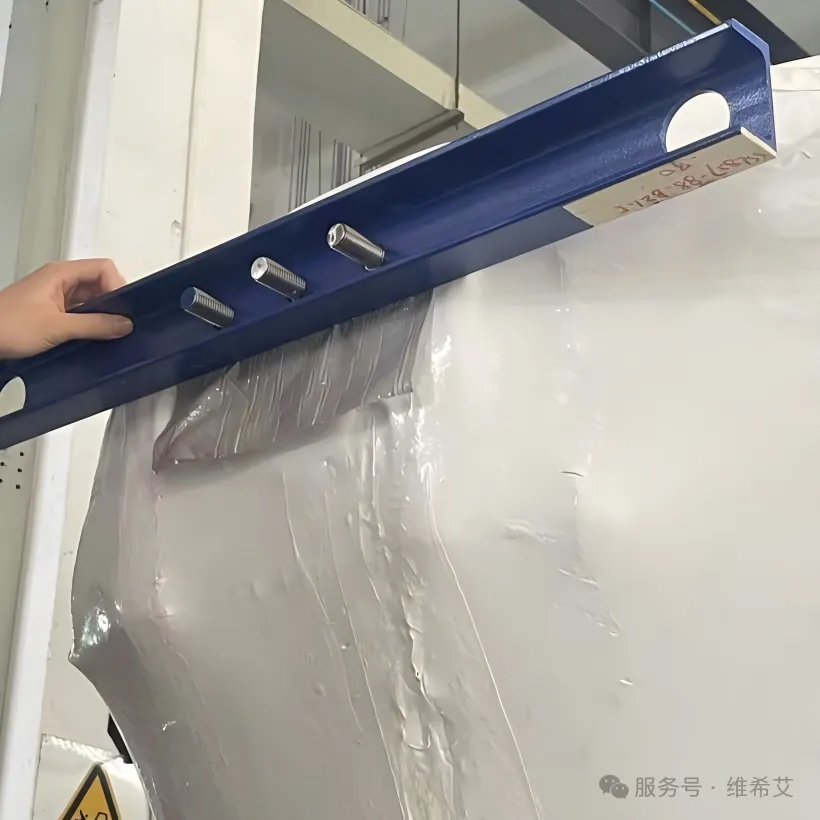
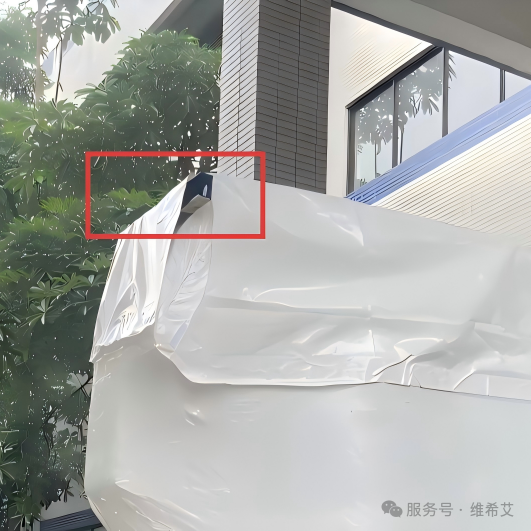
Before spraying
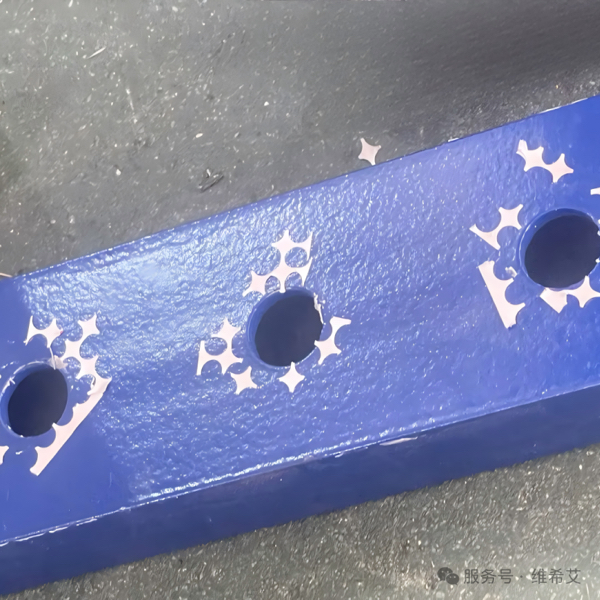
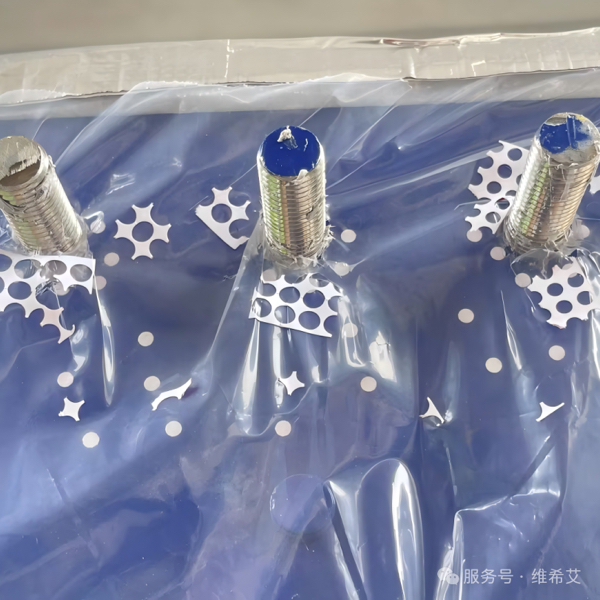
After spraying
After the 30-minute spray test, the industrial rupture-resistant film packaging remained intact. No obvious leakage or seepage was found on the outer package. More importantly, after unpacking, the inside of the package remained dry and clean.
The water-indicating labels did not turn red, which showed that no visible water vapor entered the inspected areas during the test. The lifting opening, zipper access area, channel steel bolt hole positions, and top sealing areas all maintained effective protection.
For the customer, this result confirmed that the packaging design could meet the immediate waterproof sealing requirement and support the target scenario of long-term outdoor storage. It also proved that attention to structural weak points is critical in transformer packaging. Simply wrapping the product is not enough; each potential water entry position must be sealed and verified.
For large electrical equipment, waterproof packaging is the first layer of protection. However, corrosion prevention should not rely only on external waterproofing. During sea transportation and outdoor storage, temperature changes may still cause condensation inside the package if humidity is not properly controlled.
This is where VCI anti-corrosion packaging can add further value. VCI, or volatile corrosion inhibitor technology, releases anti-rust molecules that form a protective layer on the metal surface. This helps reduce the contact between metal, moisture, and oxygen, lowering the risk of rust during storage and transportation.
For transformer packaging, a more complete protection system may include:
PRM industrial rupture-resistant film as the outer waterproof layer.
VCI film or VCI bags for anti-corrosion protection around key metal parts.
VCI desiccants or anti-moisture materials to help manage internal humidity.
Rust inhibitors for selected metal surfaces before packaging.
Customized sealing treatment for bolt holes, lifting ports, and structural gaps.
By combining waterproof sealing and VCI corrosion protection, manufacturers can create a more reliable packaging system for export transformers, dry-type transformers, large electrical cabinets, and other power equipment.
A well-designed transformer packaging solution can bring several practical benefits.
It reduces the risk of water ingress during outdoor storage and sea-land transportation. This is especially important for projects where equipment may be stored at ports, construction sites, or outdoor warehouses before installation.
It helps prevent rust on metal components. When VCI materials and moisture-control solutions are used properly, the package can provide a cleaner and more stable storage environment.
It improves delivery reliability. For export projects, packaging failure may lead to claims, rework, and delayed commissioning. Strong packaging reduces these risks.
It supports long-term storage requirements. For power equipment projects, installation schedules may change. A packaging solution designed for longer storage periods gives customers more flexibility.
It improves the customer’s confidence in the manufacturer. Professional packaging is part of product quality. When the equipment arrives dry, clean, and corrosion-free, it strengthens the supplier’s reliability.
There is no single packaging structure that fits every transformer. The best solution should be designed according to the equipment size, structure, storage time, transportation route, destination climate, and corrosion sensitivity.
Before designing the package, manufacturers should evaluate the following factors:
Whether the transformer has an outer shell.
How long the product will be stored outdoors.
Whether the shipment includes sea freight.
Where the main water entry risks are located.
Which metal parts require corrosion protection.
Whether lifting or inspection access is needed after packaging.
Whether the package must be opened and resealed during logistics.
Based on these conditions, VCI+ can help customers select suitable materials and design a one-stop metal protection solution, including cleaning, rust prevention, waterproof packaging, VCI packaging, moisture control, and final sealing verification.
For transformers and large electrical equipment, outdoor storage and sea-land transportation create serious risks of water ingress and corrosion. Lifting openings, bolt holes, channel steel gaps, and top cover seams are common weak points that require special sealing design.
The spray test case showed that PRM industrial rupture-resistant film can provide strong waterproof protection when properly applied to transformer packaging. Combined with VCI anti-corrosion materials and moisture-control products, it can form a more complete protection system for long-term storage and export transportation.
If your transformers, power equipment, or large metal products face problems such as outdoor water ingress, rust during storage, poor bolt hole sealing, or unreliable export packaging, VCI+ can provide a customized anti-corrosion packaging solution based on your actual working conditions.


