
Views: 0 Author: Site Editor Publish Time: 2026-10-22 Origin: Site


Tired of sticky, greasy rustproofing sprays ruining your clean surfaces? Traditional oils certainly displace moisture. However, they also attract dirt and make future maintenance an absolute nightmare. Rust relentlessly destroys metal. Yet, applying messy petroleum products often creates an entirely new set of problems for shop floor operators, mechanics, and everyday DIYers.
A modern aqueous formulation offers a radically clean solution. By leveraging advanced chemistry, you can achieve robust corrosion resistance without the frustrating sludge. In this comprehensive guide, we will explore exactly how these innovative solutions work, compare them to traditional methods, detail the precise application steps, and highlight top-tier products designed for seamless protection.
Clean Protection: Modern water-soluble formulas provide robust corrosion resistance without leaving a sticky, dirt-attracting, or oily residue behind.
Advanced Chemistry: Unlike traditional oils that merely sit on the surface, these agents utilize active corrosion inhibitors to create a dry, microscopic protective barrier.
Safety and Compliance: They are eco-friendly, non-flammable, and emit zero to low Volatile Organic Compounds, ensuring safer environments for both industrial manufacturing and automotive care.
Preparation is Vital: Proper surface preparation—specifically cleaning and thorough drying—is the critical secret to maximizing the lifespan and effectiveness of a dry-film rust preventive.
Premium Solutions: Engineered products offer industry-leading, residue-free protection tailored for a diverse array of metal components and complex assemblies.
Recent market analyses reveal a massive pivot in how global manufacturing facilities handle metal preservation. Driven by stringent environmental regulations and aggressive corporate sustainability goals, the industry is rapidly phasing out heavy petroleum distillates. Plant managers and engineers now demand clean manufacturing processes. This shift has accelerated the adoption of advanced water-based technologies. These modern liquids not only meet strict environmental compliance but also drastically reduce secondary cleaning costs on the production line, proving that ecological responsibility can directly improve the bottom line.
To truly grasp the value of modern corrosion prevention, we must understand the fundamental mechanics of these formulas. In industrial and automotive maintenance, a rust preventive is a substance applied to metal surfaces to halt oxidation. Historically, products relied heavily on petroleum solvents, mineral oils, or lanolin as their primary carrier. By contrast, a high-quality water-based anti-rust agent utilizes purified water as the primary delivery mechanism for its active corrosion inhibitors.
The most significant operational advantage of this specific chemistry is the complete elimination of oily residue. Imagine crawling under a vehicle or inspecting a newly machined pump housing, only to find every bolt covered in a thick, black paste of oil and grit. When you apply a petroleum-based product, the solvent eventually flashes off, leaving a heavy, wet layer that remains perpetually sticky.
Conversely, when you apply an aqueous rust inhibitor, the water carrier gradually evaporates into the surrounding atmosphere. What remains is a microscopic, dry-to-the-touch protective film. This transparent barrier bonds securely to the metal substrate. Because it cures dry, it actively repels airborne dust, trail sand, and manufacturing debris. Consequently, metal parts remain pristine, easy to handle, and immediately ready for subsequent manufacturing processes.
A persistent misconception among consumers is that water inherently causes rust, leading to natural skepticism about water-based preventives. The logic seems intuitive since moisture accelerates oxidation. Applying a liquid composed mostly of water should theoretically harm the bare metal.
However, this represents a fundamental misunderstanding of modern chemical engineering. While untreated ambient moisture does facilitate rust, the water in these engineered products acts merely as a temporary vehicle. The liquid is densely packed with active Volatile Corrosion Inhibitors and barrier chemicals. The exact moment the solution touches the metal, these inhibitors instantly neutralize the electrochemical oxidation process. The metal remains completely protected during the brief drying phase, rendering the water carrier entirely safe and highly efficient.
Understanding the precise mechanism of corrosion is necessary to appreciate how these agents function at a molecular level. Rust is not a biological infection; rather, it is a highly predictable electrochemical reaction.
For iron or steel to rust, three specific elements must be present: iron, oxygen, and an electrolyte like water or ambient humidity. When these elements combine, the iron atoms lose electrons to the oxygen atoms in an anodic reaction. This continuous transfer of electrons forms iron oxide.
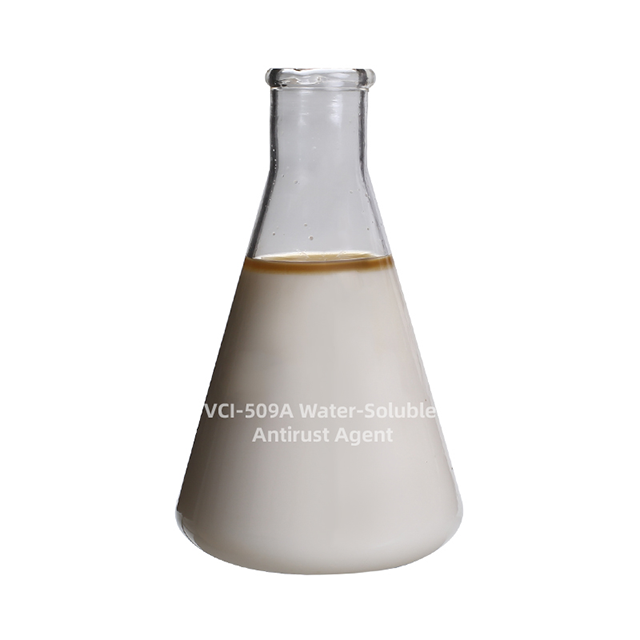
A premium VCI-509A Water-Soluble Antirust Agent interrupts this electrochemical process immediately. The active molecules in the formula possess a strong magnetic affinity for metal surfaces. As the water evaporates, these molecules polarize and attach themselves to the substrate, forming a monomolecular layer. This film acts as an impermeable physical shield, blocking oxygen and moisture from interacting with the iron atoms. Furthermore, passivating inhibitors alter the surface chemistry of the metal, effectively neutralizing the anodic and cathodic sites. Without that critical electron transfer, oxidation becomes chemically impossible.
It is crucial to distinguish between a rust converter and a rust preventive. A dry-film preventive is designed to stop rust from forming on clean metal or to prevent existing, minor surface oxidation from spreading. It does not reverse heavy, flaking rust scale.
Rust converters typically contain harsh phosphoric or tannic acids, which chemically react with iron oxide to turn it into an inert, black substance. A preventive agent, on the other hand, seals the surface against future environmental exposure. While it will significantly slow down the progression of existing rust by starving it of oxygen, its primary and most effective function is proactive, long-term defense.
The debate between heavy oil coatings and dry, water-based films is prevalent across automotive restoration forums and industrial manufacturing sectors. Facilities and mechanics are increasingly moving away from heavy petroleum distillates. Making an informed decision requires looking at the objective data regarding performance and material compatibility.
Oil and lanolin-based products have been utilized for decades because they excel at displacing moisture and creeping into tight crevices. However, their physical properties create significant operational bottlenecks.
Because they never fully cure, they act as a relentless magnet for environmental contaminants. On an off-road vehicle, an oil-coated undercarriage will quickly accumulate a heavy sludge of gravel and road salt. In an industrial setting, oil-coated pump shafts or valve bodies are incredibly messy to handle. Workers are forced to use heavy degreasers before those parts can be assembled, painted, or welded. Moreover, the petroleum distillates found in many aerosol sprays are chemically incompatible with certain non-metal materials. Prolonged exposure can cause natural rubber seals, EPDM weatherstripping, and delicate automotive plastics to swell, soften, and eventually degrade.
Water-based formulations bypass these messy issues entirely. Because they cure to a resilient, dry film, they maintain the original appearance and cleanliness of the metal. They are chemically inert to plastics, rubbers, and complex wiring harnesses, making them universally safe for multi-material assemblies. For components that need to be handled daily, shipped in standard cardboard packaging, or painted shortly after treatment, adopting a reliable water-based anti-rust agent is undeniably the superior engineering choice.
| Feature Metric | Oil-Based Lanolin Preventives | Water-Based Anti-Rust Agents |
|---|---|---|
| Residue Finish | Wet, sticky, greasy to the touch. | Dry, transparent, clean to the touch. |
| Dirt Attraction | High—acts as a magnet for dust and grime. | None—dry film repels particulate matter. |
| Paintability | Unpaintable. Requires heavy solvent cleaning. | Often paintable directly over the cured film. |
| Rubber Plastic Safety | May swell or degrade certain rubbers and plastics. | Completely safe for all rubbers, plastics, and wiring. |
| Eco-Friendliness | Often contains toxic compounds; difficult to dispose of. | Zero to low emissions; environmentally responsible. |
| Cleanup Method | Requires harsh chemical solvents or degreasers. | Easy cleanup with standard alkaline washes or soap. |
Switching to a dry-film protocol offers measurable advantages that extend far beyond mere corrosion prevention. These specific benefits directly impact workplace safety, production line efficiency, and overall project costs.
Regulatory agencies globally are placing stricter limits on harmful emissions due to their negative impact on air quality and human health. Traditional solvent-based rust preventives release significant toxic fumes into the atmosphere during the drying phase. Modern aqueous agents are formulated to be environmentally responsible. They are entirely non-flammable, eliminating the risk of fire hazards in enclosed manufacturing spaces or home garages, and creating a much safer breathing environment for applicators.
In manufacturing workflows, time is literally money. When metal parts are coated in oil to prevent flash rust during storage, that oil must be meticulously removed via chemical baths before the part can be powder-coated or welded. Because a high-quality aqueous agent leaves a microscopic, non-greasy film, it often does not interfere with subsequent coatings. Many formulations actually act as an excellent primer base for paint. Additionally, they do not produce toxic fumes or compromise weld integrity when subjected to the extreme heat of welding equipment.
Modern vehicles and machinery are incredibly complex assemblies of steel, aluminum, rubber, and precision plastics. Applying a heavy petroleum spray to a mixed-material component often leads to premature gasket failure. Water-soluble formulas are chemically inert to non-metals. You can safely spray them over wiring harnesses, O-rings, and hydraulic seals without worrying about material degradation.
From an engineering and procurement standpoint, the economics of water-soluble liquids are highly attractive. Premium industrial options offer flexible dilution ratios—often ranging from 1:5 to 1:20 depending on the required protection duration. This means a single drum of concentrate yields massive volumes of usable rust preventive. Plant operators can precisely tune the concentration to match their specific indoor storage or transit requirements, drastically reducing per-unit coating costs.
Choosing the correct formulation is not a guessing game. It requires matching the chemical properties of the inhibitor to your specific shop floor conditions. When evaluating a water-soluble antirust formula, engineers should focus on three critical parameters.
First, verify the dilution flexibility. A robust industrial agent should allow you to adjust the water-to-concentrate ratio based on whether you need short-term flash rust protection between machining steps or long-term indoor storage protection. Second, check the pH level. A slightly alkaline pH—typically between 8 and 10—is ideal for neutralizing acidic contaminants left behind by cutting fluids or fingerprints. Finally, ensure the product is free from heavy metals and nitrites to comply with modern occupational safety standards.
The lifespan heavily depends on the dilution ratio and storage environment. When applied correctly and stored indoors, a high-quality aqueous film can protect metal components for anywhere from three to twelve months. For export shipping or harsh outdoor exposure, these films are usually combined with VCI packaging materials to create a comprehensive barrier.
While you can apply it over light surface oxidation to slow down further decay, it is not recommended as a permanent fix. Aqueous preventives are designed to seal clean metal. For optimal results, you should mechanically wire-brush or chemically treat existing heavy rust before applying the preventive film.
Proper surface preparation is the secret to maximizing the effectiveness of any dry-film preventive. The metal must be completely free of machining oils, grease, and loose scale. Using a high-quality alkaline degreaser followed by a clean water rinse ensures the active corrosion inhibitors can bond directly to the metal substrate.
Relying on outdated, messy petroleum oils is no longer necessary or efficient. By transitioning to advanced aqueous chemistry, you secure superior corrosion resistance while maintaining pristine, weld-ready components. Whether you are managing a high-volume machining facility or protecting valuable automotive parts, choosing the right chemical partner is critical.
Stop letting oily residues slow down your production line. Discover the clean, highly efficient protection of the VCI-509A Water-Soluble Antirust Agent and explore our full range of industrial preservation solutions by visiting VCI Plus Packing today. Protect your metal assets the smart, clean way.


